
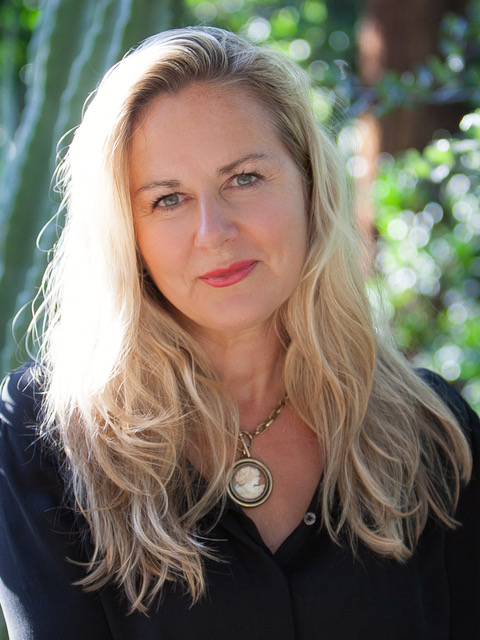
Sandra Rebok
Historian
- Profile
Profile
Residency: September 2022 – May 2023
Research Project Title: Between Science and politics: Humboldt and the knowledge circulation in the American Southwest (1776-1848)
Research Interests: History of knowledge, exploration voyages (18-19th century), globalization of science, intellectual networks, science diplomacy, entangled history, Atlantic history, Southwest
Sandra Rebok is a historian and social scientist specializing in 18th- and 19th-century scientific exploration voyages and the political contexts in which they occurred, with a particular focus on the complex entanglements between the pursuit of politics and of science. Trained in Germany, Spain, and France, she has held academic appointments and fellowships at leading institutions in Europe and America, and gained curatorial and advisory experience through international exhibitions and cultural diplomacy projects. Committed to interdisciplinary dialogues and global approaches, along with a strong interest in science diplomacy, history diplomacy, and culture and foreign policy, she seeks to illustrate how historical knowledge contributes to a better understanding of the challenges of today’s societies.
With more than 20 years of experience in Humboldtian scholarship, with a particular focus on his connections to the Spanish Empire and the United States, she is currently working on a new book project that analyzes Thomas Jefferson’s strategic pursuits regarding the Southwest under Spanish and Mexican governance. The overall goal of this book project is to illustrate how, from the American Revolution onward, the U.S. nation-building process and the developments in the Spanish and later Mexican Southwest became increasingly intertwined, culminating in the U.S. annexation of this region in 1848. It addresses the urgent need to better understand the Hispanic presence in the U.S. today by tracing the historic legacy of the Southwest as a space that has generated a common culture, identity, and history, which remains visible in this region, both within and beyond the U.S. border.